
Can Indianapolis, IN Shoppers Charge the 2027 Mitsubishi Eclipse Sportback EV Easily on Daily Routes?
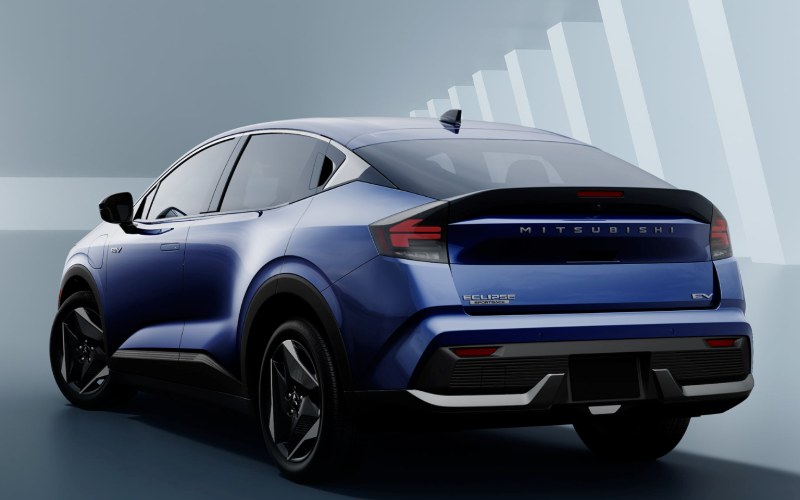
Dorsett Mitsubishi – Can Indianapolis, IN Shoppers Charge the 2027 Mitsubishi Eclipse Sportback EV Easily on Daily Routes?
Charging confidence can make or break an EV decision, and the 2027 Mitsubishi Eclipse Sportback EV gives Indianapolis-area shoppers several practical ways to build an easy routine. For drivers who move between downtown appointments, Marion County suburbs, school activities, campus visits, and weekend errands, the biggest question is not only how far the EV can go. It is how naturally charging fits into the week. Mitsubishi Motors lists the Eclipse Sportback EV with Level 1 and Level 2 charging capability, plus Level 3 access through the Tesla® Supercharger network, which is the largest fast-charging network in North America.
That range of charging options matters because no two EV owners use a vehicle the exact same way. A shopper with a short commute may rely heavily on home charging. A driver who covers more regional miles may value public Level 2 stations and DC fast charging access. Someone comparing an EV against a plug-in hybrid may want to understand how overnight charging, route planning, and battery preconditioning work. The Eclipse Sportback EV is positioned to answer those needs with a flexible charging setup and a practical projected range cited in provided content at 282 miles.
How Daily Charging Can Work
For many Indianapolis-area drivers, the easiest EV ownership routine starts at home. Level 1 charging uses a standard household outlet and can be useful when the vehicle is parked for longer periods. It is not the fastest way to recharge, but it can add useful range for drivers with modest daily mileage. Level 2 charging is typically the more convenient home-charging solution because it uses 240-volt power and replenishes the battery more quickly. Provided content notes that the Eclipse Sportback EV uses a J-1772 port for AC charging and has an onboard charger capable of 7.2 kilowatts.
In practical terms, Level 2 charging is the option many shoppers should consider if the EV will be used every day. Provided content describes a 20 to 80 percent Level 2 charging time of roughly 6.5 hours, which aligns well with overnight parking or a workday charging session. That means the vehicle can be plugged in during normal downtime instead of treated like a special errand. For households with a garage or driveway, a Level 2 charging setup can make the Eclipse Sportback EV feel as simple as charging a phone overnight, only on a larger scale.
Why DC Fast Charging Matters
Even if most charging happens at home, DC fast charging remains important for regional travel and busier days. Mitsubishi Motors notes Level 3 access through the Tesla® Supercharger network. Provided content also describes a NACS port on the right-front fender for DC fast charging, with charging from 10 to 80 percent in about 35 minutes under ideal circumstances. That kind of access helps reduce the friction that some first-time EV shoppers worry about when thinking beyond the daily commute.
Fast charging is best viewed as a travel and convenience tool rather than the only charging strategy. Around Indianapolis, a driver may use home charging during the week, public Level 2 charging during longer stops, and DC fast charging for regional drives or especially busy schedules. The value is having options. The Eclipse Sportback EV supports that layered approach, allowing shoppers to match the charging method to the moment instead of relying on a single solution.
Charging Features to Ask About Before Buying
Before choosing an EV, shoppers should understand more than plug type and charging speed. The Eclipse Sportback EV includes useful details that can make charging easier to manage, especially for drivers new to electric ownership. Provided content notes that entering a DC fast charger into the navigation as a destination can automatically precondition the battery pack for faster charging. Drivers can also tell the vehicle to precondition if navigation is not being used.
- Home charging plan: Decide whether Level 1 charging can cover daily mileage or whether a Level 2 charger would better match the schedule.
- Public charging access: Identify Level 2 stations near work, shopping areas, schools, or frequent destinations around Indianapolis.
- Fast-charging strategy: Use DC fast charging for longer drives, tight schedules, or travel days when a quicker charging stop is useful.
- Battery preconditioning: Ask how navigation-based preconditioning works and when to use manual preconditioning.
- Charging equipment: Review the charging cord, adapters, and port locations so the routine feels familiar before the first week of ownership.
These questions help turn EV ownership from an abstract idea into a realistic daily plan. A shopper may find that charging is simpler than expected once the routine is mapped around normal parking time. The key is matching charging access to driving habits before bringing the vehicle home.
Range and Charging Work Together
Range and charging should always be considered together. Provided content cites a projected 282-mile range for the 2027 Mitsubishi Eclipse Sportback EV, which gives many drivers enough flexibility for multiple days of local use depending on mileage. Actual range can vary based on speed, driving style, outside temperature, terrain, climate control use, and passenger or cargo load. Still, a practical projected range paired with Level 1, Level 2, and Level 3 charging access gives the Eclipse Sportback EV a strong foundation for everyday confidence.
For Indianapolis-area driving, that combination can be especially appealing. Local routines often include a blend of city streets, suburban routes, highway segments, and frequent parking stops. The Eclipse Sportback EV’s compact SUV format also helps with parking garages, neighborhood streets, and crowded retail areas. When the vehicle is plugged in regularly, range anxiety becomes less of a concern because the driver starts most days with a planned amount of charge.
What First-Time EV Buyers Should Test
A test drive should include more than acceleration and comfort. EV shoppers should ask to see the charging ports, review the infotainment screens, discuss charging times, and learn where charging information appears in the vehicle. The Eclipse Sportback EV’s dual 14.3-inch displays, standard Android Auto, Apple CarPlay, and navigation functions are important because a good EV experience depends on clear information. Drivers should be able to see range, route details, charging guidance, and energy information without confusion.
- Check the charging ports: Locate the AC and DC charging ports and confirm how each one opens and connects.
- Review display information: Look for range estimates, battery state of charge, navigation guidance, and charging-related settings.
- Ask about preconditioning: Learn how battery preconditioning helps during DC fast charging stops.
- Simulate daily use: Discuss a normal commute, weekly mileage, and where the vehicle would park most often.
- Compare charging options: Understand when Level 1, Level 2, and Level 3 charging each make the most sense.
Taking these steps helps shoppers leave the dealership with a real-world understanding of EV ownership. The goal is not just to like the vehicle during a short drive. The goal is to know how it fits daily life, charging access, and future travel plans.
Frequently Asked Questions:
Can the 2027 Mitsubishi Eclipse Sportback EV be charged at home?
Yes. Mitsubishi Motors lists Level 1 and Level 2 charging capability for the Eclipse Sportback EV. Level 1 can use a standard household outlet, while Level 2 uses 240-volt power and is often the preferred home solution for daily EV ownership.
Does the Eclipse Sportback EV support fast charging?
Yes. Mitsubishi Motors notes Level 3 charging access through the Tesla® Supercharger network. Provided content also describes a NACS port for DC fast charging and a 10 to 80 percent fast-charge time of about 35 minutes under ideal circumstances.
Is the projected range enough for Indianapolis-area driving?
For many shoppers, the cited projected 282-mile range should be practical for daily routes and regional use. Actual range varies, so it is helpful to compare that figure with personal mileage, commute length, and charging access.
The 2027 Mitsubishi Eclipse Sportback EV is built around the idea that electric driving should feel manageable, not complicated. With multiple charging levels, Tesla® Supercharger network access, a practical projected range, and modern in-cabin technology, it gives Indianapolis-area shoppers the tools needed to build a confident EV routine.
0 comment(s) so far on Can Indianapolis, IN Shoppers Charge the 2027 Mitsubishi Eclipse Sportback EV Easily on Daily Routes?